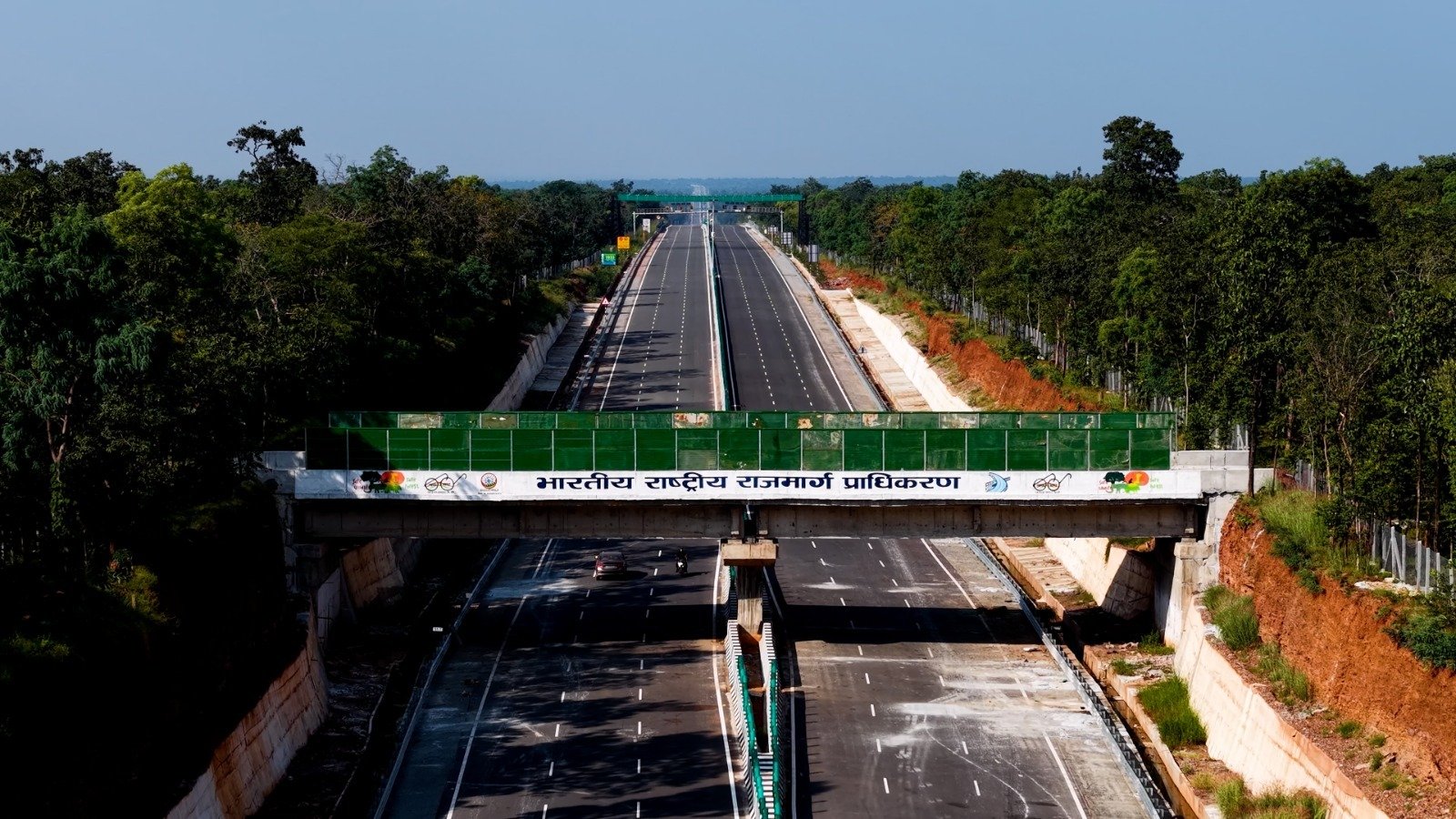
Raipur: The National Highways Authority of India (NHAI) has introduced several initiatives to balance infrastructure development with environmental protection. This sustainable model is visible across various projects in Chhattisgarh, where the use of recycled industrial waste in highway construction is helping lower carbon emissions.
Record use of fly-ash
In a major push for environmental conservation, the NHAI is using fly-ash from thermal power plants for road construction. A significant portion of this waste comes from power projects based in Chhattisgarh.
The state has seen a consistent rise in the utilization of this industrial byproduct over recent years:
- 2024-25: A record 2.17 crore metric tonnes of fly-ash was consumed.
- 2025-26: More than 62 lakh metric tonnes was utilized.
- 2026-27: Approximately 20 lakh metric tonnes has already been used in the current financial year.
The NHAI has also integrated other alternative materials to develop green highways.
In 2024-25, authorities used 30,477 metric tonnes of recycled materials, including steel slag, waste tyre rubber, and bio-bitumen.
An additional 2,691 metric tonnes of these materials was utilized in 2025-26.
Water conservation initiatives
Alongside road construction, the NHAI is focusing on water conservation and groundwater recharge to improve water tables in rural areas.
- Amrit Sarovars: Officials have rejuvenated and constructed 13 water bodies along national highways, including rural pockets of Chhattisgarh.
- Water harvesting: To boost rainwater harvesting, the number of water harvesting pits was increased from 14 in 2024-25 to 105 the following year.
- Recycled water: To prevent the wastage of clean drinking water during construction and plantation maintenance, the NHAI used 323 kilolitres of treated water from sewage treatment plants (STPs).
Eco-friendly infrastructure in forests
To protect wildlife habitats, the NHAI has developed eco-friendly infrastructure in ecologically sensitive zones across Chhattisgarh.
A key project is the 3-km underground tunnel inside the Udanti-Sitanadi Tiger Reserve. By moving vehicular traffic underground, the project ensures minimal disturbance to the forest ecosystem.
The NHAI is installing sound barriers along this stretch to shield wildlife and birds from vehicular noise. The project also includes monkey canopies for arboreal animals, alongside dedicated elephant passes and animal underpasses to ensure unhindered wildlife movement.
Bee corridors and medicine parks
The NHAI is executing new projects along highway margins in the plains and forest areas of Chhattisgarh to support the local ecosystem and rural economy.
Special bee corridors will be developed along the roadsides to enhance natural pollination in nearby fields, helping local farmers increase crop productivity.
Furthermore, authorities will establish medicine parks on vacant land, planting thousands of medicinal saplings including neem, tulsi, aloe vera, and amla.
Under the “Ek Ped Maa Ke Naam 2.0” campaign, the NHAI created a green record last year by planting more than 2.5 lakh saplings along national highways and dividers in Chhattisgarh.