Raipur
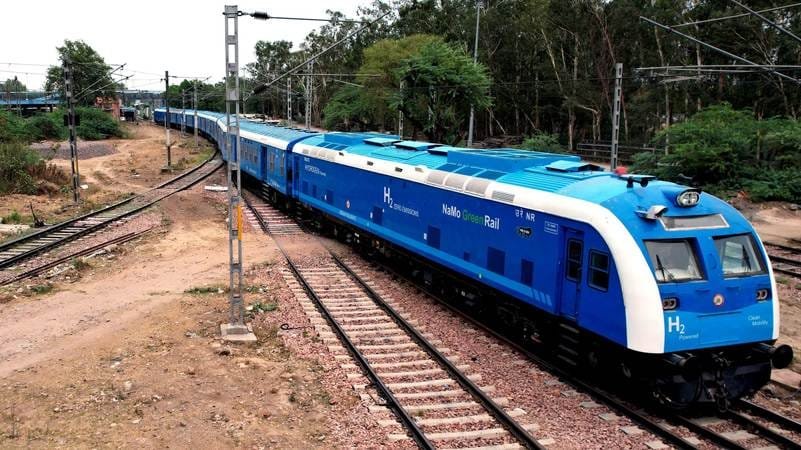
India launched its first hydrogen-powered train on the Jind–Sonipat rail section in the Delhi region on 17 July 2026. The train has covered over 1,200 km during test runs, saving more than 3,200 litres of diesel fuel.
The train generates electricity on board through a chemical reaction between hydrogen and oxygen to power its propulsion system. The process emits only water vapour, producing no smoke or tailpipe carbon emissions.
Developed indigenously by Indian Railways, the 10-coach train features two hydrogen driving power cars that generate a combined power output of 2,400 kW. It uses Lithium Iron Phosphate (LFP) batteries alongside integrated hydrogen cylinders.
Indian Railways established its first dedicated hydrogen storage facility in Jind as part of the project. The plant stores green hydrogen at pressures up to 500 bar and dispenses fuel at 350 bar, maintaining a total storage capacity of nearly 3,000 kg.
Safety systems installed on the train automatically detect hydrogen leaks, excessive heat, fire, and smoke. The train features automatic shut-off mechanisms, continuous ventilation systems, and adherence to international safety standards following testing and verification. Rail authorities will extend operational trials to the main Delhi route following the initial runs on the Jind–Sonipat section.
The fuel-cell train marks the setup of an indigenous hydrogen rail ecosystem. The project reflects India’s focus on zero-emission rail transport and prepares the ground for future expansion in clean transit technology.