Chhattisgarh Tribal Community Forms the Soul of India, Not a Vote Bank: CM Vishnu Deo Sai

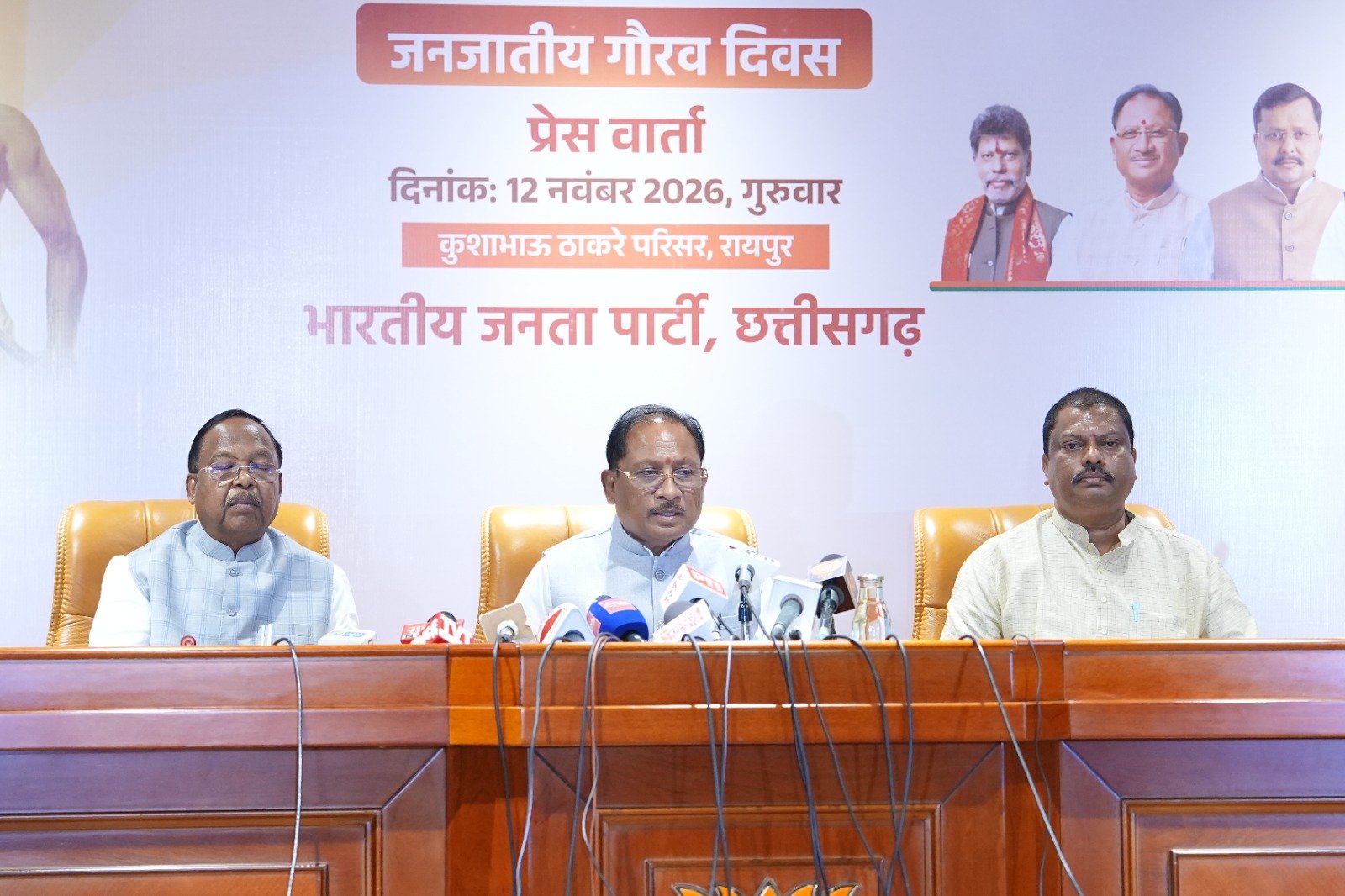
Raipur, November 12: Chief Minister Vishnu Deo Sai has said that the tribal community is the soul of India, not merely a vote bank. Addressing a press conference at the BJP State Office in Raipur, he said that the vision of Sabka Saath, Sabka Vikas, Sabka Vishwas and Sabka Prayas places tribal communities at the centre of building a Developed India by 2047.
The press conference was organised during Janjatiya Gaurav Saptah, being observed from November 11 to 18, 2026, to mark the 151st birth anniversary of Dharti Aaba Bhagwan Birsa Munda. CM Sai spoke about Birsa Munda’s struggle, the sacrifices of tribal freedom fighters, central government welfare schemes and the vision of Viksit Bharat 2047.
Tribal Heroes Started Freedom Struggle Nearly 100 Years Before 1857
CM Sai said that tribal freedom fighters had launched the struggle against British rule almost 100 years before the Revolt of 1857. He recalled the contributions of Tilka Majhi (1784), Sidho-Kanhu, Chand-Bhairav, Phulo-Jhano (1855), Shaheed Veer Narayan Singh of Chhattisgarh, Telanga Kharia, Budhu Bhagat, Tantya Bhil, Rani Durgavati, Alluri Sitarama Raju, Komaram Bheem and Rani Gaidinliu.
He also remembered the sacrifice of hundreds of followers of Govind Guru at Mangarh Dham in 1913, an incident that took place before the Jallianwala Bagh massacre. He said that for decades, historical accounts highlighted only selected freedom fighters, while the sacrifices of thousands of tribal heroes remained missing from textbooks.
Journey of Janjatiya Gaurav Diwas Since 2021
The Chief Minister said that the Central Government declared November 15 as Janjatiya Gaurav Diwas in 2021. The first national-level programme was organised in Bhopal, followed by the inauguration of the Birsa Munda Memorial Park and Museum in Ranchi and the renaming of Habibganj railway station in Bhopal after Rani Kamlapati.
In 2022, President Droupadi Murmu visited Khunti. In 2023, Prime Minister Narendra Modi became the first Prime Minister to visit Ulihatu, the birthplace of Bhagwan Birsa Munda, and launched the PM-JANMAN scheme from there.
National programmes were organised in Jamui, Bihar, in 2024, when the 150th birth anniversary of Birsa Munda was celebrated throughout the year as Janjatiya Gaurav Varsh. In 2025, development projects worth more than ₹9,700 crore were dedicated in Dediapada, Gujarat.
He added that tribal freedom fighter museums are being developed in several states and that the President, Vice President and Lok Sabha Speaker pay tribute to Bhagwan Birsa Munda every year at Parliament House.
More Than 10.4 Crore Tribal Citizens in India
Referring to the 2011 Census, CM Sai said that India has more than 10.4 crore tribal citizens, accounting for 8.6% of the country’s population. There are 720 Scheduled Tribes, including 75 Particularly Vulnerable Tribal Groups (PVTGs). Tribal populations constitute more than 10% of the population in 239 districts.
He said that under the leadership of former Prime Minister Atal Bihari Vajpayee, the separate Ministry of Tribal Affairs was established in 1999. Chhattisgarh and Jharkhand were formed in 2000, while Santhali and Bodo languages were included in the Eighth Schedule in 2003.
In 2022, Droupadi Murmu became India’s first tribal woman President. He also highlighted the presence of tribal Chief Ministers in Chhattisgarh, Odisha and Arunachal Pradesh.
CM Sai said that after the abrogation of Article 370, Jammu and Kashmir provided reservation to Scheduled Tribes in nine Assembly seats for the first time. He also highlighted the BJP’s representation in reserved Lok Sabha and Assembly constituencies.
Ministry of Tribal Affairs Budget Increased by 231%
The Chief Minister said that the budget of the Ministry of Tribal Affairs increased by 231%, from ₹4,497.96 crore in 2014-15 to ₹14,926 crore in 2025-26.
He said that more than 40 central ministries are now allocating funds for tribal development under the DAPST framework. Major initiatives include PM-JANMAN, Dharti Aaba Tribal Village Utkarsh Abhiyan, education, healthcare and livelihood programmes.
He also highlighted faster distribution of Forest Rights Act titles, empowerment of gram sabhas through PESA rules and the deployment of 1.54 lakh Adi Karmayogi volunteers across 76,963 villages.
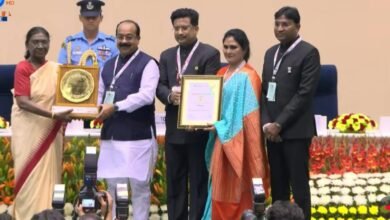
Platforms such as Adi Vani AI, research institutions, Mann Ki Baat and Padma Awards are also helping promote and recognise tribal languages, traditions and culture at the national level.
Krishak Unnati Yojana: ₹35,904 Crore Transferred to Farmers
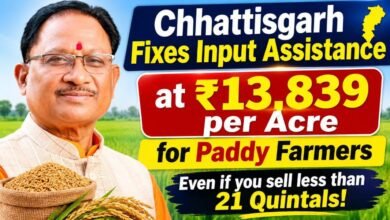
CM Sai also highlighted the implementation of the Krishak Unnati Yojana, aimed at increasing farmers’ income, improving agricultural productivity, boosting crop production and reducing cultivation costs.
Under the scheme, financial assistance is transferred directly into farmers’ bank accounts through the transparent Direct Benefit Transfer (DBT) system.
From Kharif 2023 to Kharif 2025, around 25.52 lakh farmers received financial assistance amounting to ₹35,904.90 crore.
To encourage crop diversification, the government increased the assistance for farmers shifting from paddy to alternative crops from ₹11,000 to ₹15,000 per acre for Kharif 2026.
Farmers cultivating vegetables and fruits instead of paddy can receive the benefit after registration on the Integrated Farmer Portal and verification of the eligible area through DCS.
6,398 Fertiliser Inspections, 43 Licences Cancelled
The Chief Minister said that continuous inspections are being conducted to ensure farmers receive quality fertilisers at subsidised government rates.
Between April 1 and September 30, 2026, fertiliser inspectors conducted 6,398 inspections. Following irregularities such as black marketing, hoarding and illegal storage and transportation, authorities took action in several cases.
The action included 18 FIRs, 89 cases submitted to the Collector’s court, 43 licences cancelled, fertilisers seized in 148 cases, 131 licences suspended and sales prohibited in 363 cases.
₹219 Crore Worth of Pulses and Oilseeds Procured at MSP
Under the PM-AASHA scheme, procurement of pulses and oilseeds is being carried out at Minimum Support Price (MSP) during the Kharif and Rabi seasons.
During 2025-26, a total of 3,72,039 quintals of arhar, soybean, chana, masoor and sarson were procured through 273 procurement centres across 29 districts.
Farmers received payments amounting to ₹219.08 crore. CM Sai said procurement would continue this year to ensure economic security for farmers. Decisions regarding maize and wheat procurement are currently under consideration at the government level.
Agriculture Minister Ramvichar Netam and Chairman of the Chhattisgarh Tribal, Local Health Tradition and Medicinal Plant Board Vikas Markam were also present at the press conference.