Chhattisgarh High Court sets aside single-bench order in Jindal Steel tariff case

Raipur
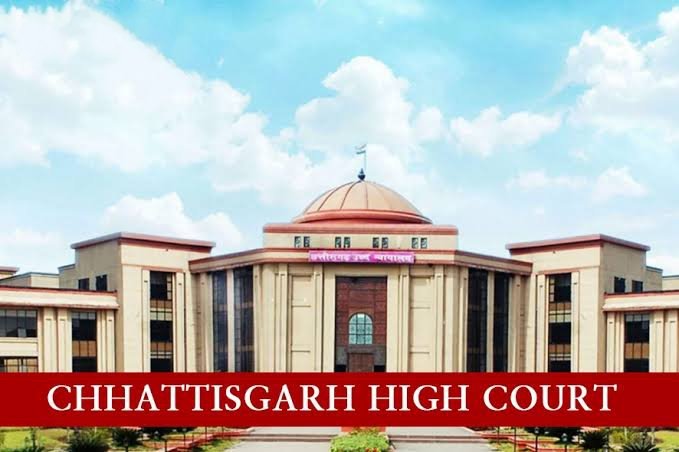
A division bench of the High Court of Chhattisgarh has set aside a single-bench order that dismissed a writ petition filed by Jindal Steel Limited, previously known as Jindal Steel and Power Limited.
Chief Justice Ramesh Sinha and Justice Bibhu Datta Guru directed the Chhattisgarh State Electricity Regulatory Commission (CSERC) to decide the matter afresh after granting the company a personal hearing.
The court held that an ineffective hearing at the initial stage vitiates the entire decision-making process. It noted that the company was neither impleaded nor afforded an effective opportunity of hearing in the initial tariff determination and true-up proceedings, even though the entire dispute pertained to power supplied under an executed Power Purchase Agreement (PPA).
The dispute stems from a demand notice dated 7 July 2016 issued by the Chhattisgarh State Power Distribution Company Limited (CSPDCL). The distribution company sought a refund of ₹153.55 crore plus interest, alleging that Jindal Steel had overcharged for electricity supplied during the financial years 2011-12 and 2012-13.
Following this, the distribution company and the Chhattisgarh State Power Transmission Company Limited (CSPTCL) denied a No Objection Certificate (NOC) for open access to the generating firm, citing the outstanding disputed amount.
Jindal Steel challenged these actions in a writ petition, which a single judge dismissed on 30 March 2026, ruling that denial of open access was justified to maintain grid discipline, system security, and public interest.
Reversing this ruling, the division bench stated that the rule regarding alternative remedy is a matter of discretion and not compulsion. The bench observed that when a proceeding suffers from a breach of natural justice, the exercise of writ jurisdiction is justified. The bench noted that the single judge erred by validating proceedings after recording violations of principles of natural justice.
The division bench kept the operation of the ₹153.55 crore demand notice and the subsequent open access denial letters in abeyance. The bench directed the State Electricity Regulatory Commission to conclude the fresh exercise preferably within two months. If any party challenges the fresh order, the Appellate Tribunal for Electricity (APTEL) must decide the appeal preferably within a further two months.