Raipur
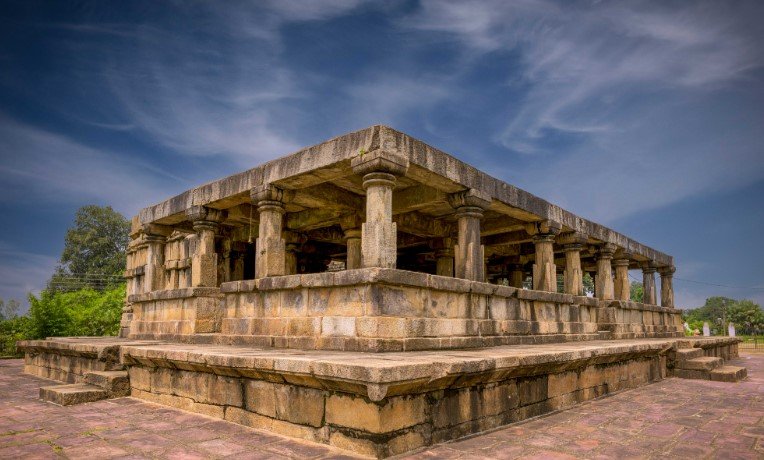
The Battisa temple in Barsur, located in the Bastar region of Chhattisgarh, continues to draw historians and devotees as a premier example of 11th-century Indian architecture and engineering. Situated in Dantewada district, the site was once the capital of the Nagvanshi rulers and remains a significant cultural landmark in the town often called the ‘city of temples’.
Architectural precision and engineering
Construction of the Battisa temple dates back to the reign of Nagvanshi King Someshwar Dev. According to inscriptions, the structure was completed around 1209 AD (Saka Samvat 1130). The temple derives its name, ‘Battisa’, from the 32 massive stone pillars that support the entire structure. These pillars are arranged in eight balanced rows, showcasing the advanced vastu knowledge and engineering skills of the period.
A notable feature of the temple is the absence of lime or mortar in its construction; the stones are joined through intricate interlocking techniques. Each pillar features detailed carvings of deities and mythological narratives, reflecting the aesthetic sensibilities of ancient craftsmen. The temple follows a rectangular plan and houses two separate sanctums, each with a Shiva Lingam. Local lore suggests these dual sanctums allowed the King and Queen to perform prayers simultaneously.
Scientific mystery of the spinning Lingam
Outside the sanctum, a finely carved Nandi statue remains a focal point for pilgrims, who follow the tradition of whispering wishes into the bull’s ear. Within the inner sanctum, the Shiva Lingam serves as a subject of scientific interest. Reports indicate that the Lingam is based on a mechanical system that allows it to rotate with the flow of water without friction or noise, highlighting the technical understanding of ancient Indian scientists.
Historical and cultural significance
The temple holds immense historical value beyond its religious appeal. Inscriptions reveal that the village of Keramruka was donated for the maintenance of the shrine. These records, which mention the presence of ministers and state officials during the temple’s consecration, are currently preserved in a museum in Nagpur.
Mythology further enriches the site’s history, with legends suggesting that the demon king Banasur established his capital here, which later evolved into historical Barsur. The area served as a primary cultural hub for the ancient Dandakaranya region.
Conservation and tourism
Alongside the Mama-Bhanja and Chandraditya temples, the Battisa temple forms part of a rich heritage circuit in Bastar. The town also houses the world’s third-largest Ganesha idol, a major attraction for tourists.
The state government and the archaeology department have undertaken consistent efforts to preserve this heritage. Restoration work conducted in 2003 helped secure the original structure and beauty of the temple. Today, the Battisa temple remains a vital destination on Chhattisgarh’s tourism map, representing the state’s ancient art and history.