Chhattisgarh hikes higher education budget by 42%, opens 13 new govt colleges in three years

RAIPUR
Chhattisgarh has increased its higher education budget by nearly 42% in three years, from Rs 1,277 crore in 2023-24 to Rs 1,816 crore in 2026-27, while opening 13 new government colleges to expand access to higher education, particularly in rural and tribal areas.
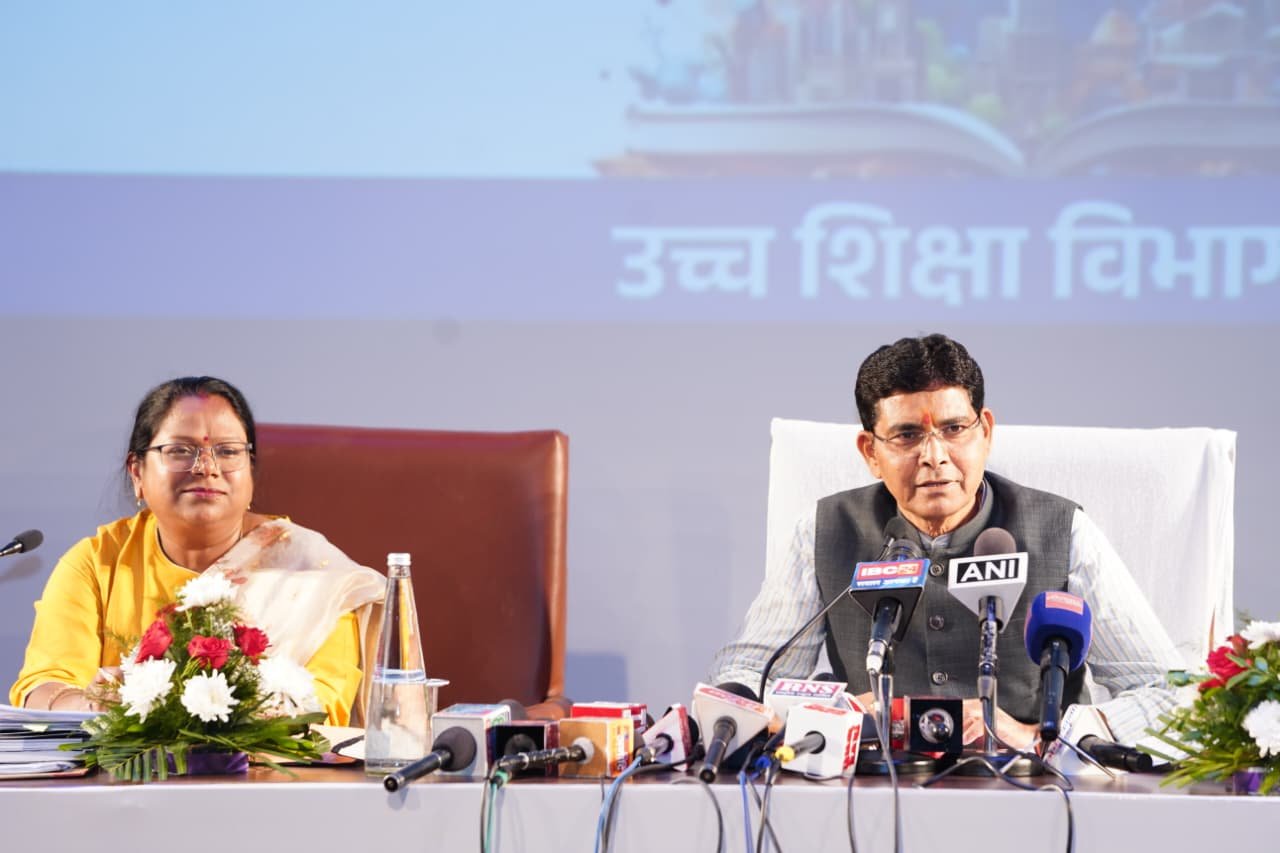
Announcing the department’s achievements and future initiatives at a press conference in Nava Raipur on Friday, Higher Education Minister Tank Ram Verma said the state government was focusing on making higher education accessible, affordable, quality-oriented and employment-driven.
He said Rs 418.25 crore had been allocated for the construction of buildings for 84 colleges. Infrastructure expansion also includes hostels in 13 colleges, additional classrooms in 33, boundary walls in 10 and additional toilets in 50 colleges.
The government has also created 391 new posts for the 13 newly opened government colleges. Five institutions started in 2026-27 include colleges at Kanteli in Mungeli district, Bendri in Raipur, Karelibadi in Dhamtari, Suhela in Baloda Bazar district and a music college in Nava Raipur.
Highlighting efforts to bridge the gap between academic learning and employment, Verma said the state had formulated the Internship Policy-2026. Under the policy, undergraduate students in their sixth semester will undertake 60 hours of internship with industries, educational institutions and social organisations to gain practical experience.
The government is also focusing on improving English communication skills among students from tribal areas. A 90-hour English communication course is being conducted in 148 government colleges, with around 10,000 students enrolled. The course focuses on everyday conversations, expressing ideas and practical use of English.
The minister said the National Education Policy (NEP) 2020 had been implemented in the state since July 2024, with Indian knowledge systems incorporated into the curriculum alongside an emphasis on students’ overall development and employability. According to the All India Survey on Higher Education (AISHE) 2023-24, Chhattisgarh’s Gross Enrolment Ratio (GER) stands at 24.8%.
On strengthening the academic workforce, Verma said 364 assistant professors had been promoted as professors, while 151 promoted professors had been elevated to undergraduate college principal positions. Direct recruitment for 595 vacant professor posts in government colleges is under process through the Chhattisgarh Public Service Commission. Recruitment has also been completed for 260 laboratory technician and 430 laboratory attendant posts.
The state has granted 577 PhD permissions to encourage research, while 105 applications are under process.
Verma said 43 new private colleges had been permitted to open between the 2023-24 and 2026-27 academic sessions. Permission had also been granted to 234 private colleges to introduce new subjects, increase seats and start additional sections.
On digital reforms, he highlighted the launch of the centralised student registration system ‘HE Online’ for managing student databases and the ‘E-Gyanarjan’ mobile application to provide study material. The department is also implementing e-Office across universities, regional offices and colleges.
The minister said nine officials and employees were facing departmental inquiries, while 13 officials and employees had been suspended in connection with complaints and alleged irregularities.
He added that nine state universities had received Rs 264.97 crore over four years, comprising Rs 255.56 crore in establishment grants and Rs 9.41 crore in capital grants.
Under the first and second phases of the Rashtriya Uchchatar Shiksha Abhiyan (RUSA), projects worth around Rs 400 crore had been sanctioned for 86 educational institutions. Most works have been completed, with the remaining projects scheduled for completion by March 31, 2027. Projects approved for 21 institutions under the Pradhan Mantri Uchchatar Shiksha Abhiyan (PM-USHA) are also under implementation.
Verma said the government’s focus was on expanding educational infrastructure, introducing employment-oriented courses, promoting research and innovation, and using digital technology to improve the quality and transparency of higher education in the state.