AI-powered ‘Gajsanket’ puts Chhattisgarh’s human-elephant conflict model on NITI Aayog radar

Raipur: Turning elephant movement data into timely warnings for villages and forest staff, Chhattisgarh’s home-grown ‘Gajsanket’ has earned national recognition after being featured among the country’s leading innovations under NITI Aayog’s Frontier Tech initiative.
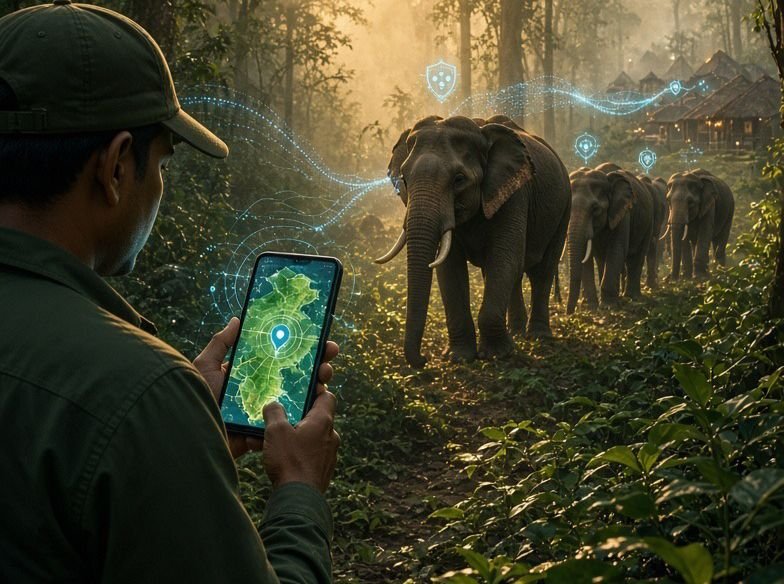
The AI-enabled system marks a shift in the State’s approach to human-elephant conflict—from responding after an encounter to alerting communities before one occurs. It combines field intelligence, GPS coordinates, GIS-based analysis, geofencing and automated communication to track elephant movement and identify villages that may fall within the animals’ movement zone.
The system was developed in response to the limitations of conventional warning mechanisms, which often depended on manual communication and could not always alert communities quickly enough. Information gathered by trained frontline personnel on elephant locations, herd movement and behaviour is processed to generate alerts that can be sent through SMS, WhatsApp and voice messages.
The technology, however, does not replace the human network on the ground. Foot patrols, forest staff and traditional methods such as village announcements continue to form part of the warning and response mechanism, particularly for communities with limited access to smartphones or internet connectivity.
According to the NITI Aayog Frontier Tech case study cited in the State’s press note, human-elephant conflict incidents in the relevant period fell from 445 in 2022-23 to 107 in 2024-25. Compensation payouts also declined from around Rs 79 lakh to Rs 19 lakh during the same period.
One of the most significant outcomes was recorded in Udanti-Sitanadi Tiger Reserve, where the case study reported 21 months without human or elephant casualties following the rollout of the intervention.
The scale of the system is reflected in the number of warnings generated. Gajsanket had issued around 60 lakh alerts across Chhattisgarh by September 2025, underlining its potential for deployment across other conflict-prone landscapes.
The model has now drawn attention beyond Chhattisgarh, with NITI Aayog describing it as a low-cost and scalable approach to human-wildlife coexistence. Interest from other States has also raised the possibility of adapting the system to other landscapes facing similar conflicts.
At the heart of Gajsanket is the integration of technology with field-level conservation: field intelligence, AI, GIS, geofencing and real-time alerts are linked to foot patrols and community participation.
The national recognition is significant for Chhattisgarh because the innovation originated from a local conservation challenge and evolved into a field-based system with potential for wider replication.
For a State frequently confronting the difficult balance between wildlife conservation and human safety, Gajsanket offers a simple but important proposition: detect elephant movement early, alert vulnerable communities quickly and enable frontline teams to respond before conflict turns fatal.