Mahanadi Dispute: Chhattisgarh Pushes Dialogue, Science and Consensus for Lasting Water-Sharing Settlement

Raipur
Chhattisgarh Chief Minister Vishnu Deo Sai on Thursday called for a permanent and equitable settlement of the long-running Mahanadi water dispute with Odisha, pitching dialogue, scientific assessment and political consensus as the way forward while stressing that the interests of neither state should be compromised.
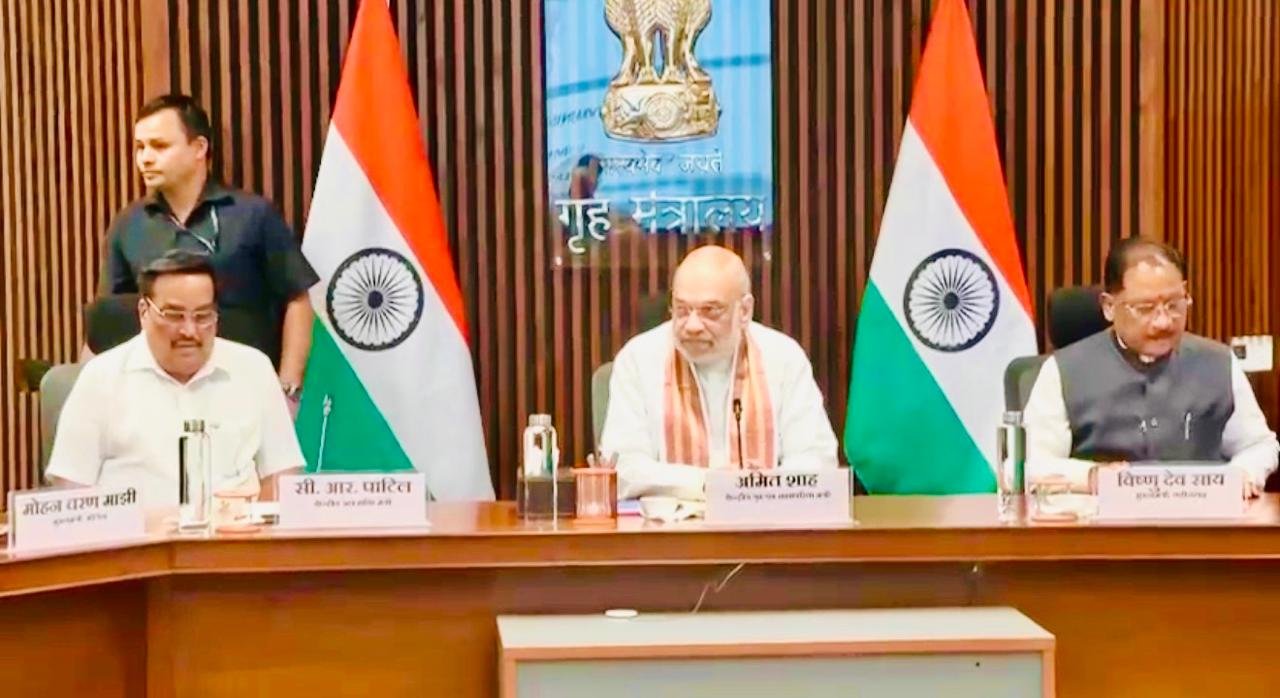
At a high-level meeting chaired by Union Home and Cooperation Minister Amit Shah at Kartavya Bhawan here, Sai said the Mahanadi should be a source of cooperation between Chhattisgarh and Odisha rather than a point of confrontation. He expressed confidence that Shah’s intervention could help the two states arrive at a durable solution to the decades-old dispute.
Odisha Chief Minister Mohan Charan Majhi represented his state at the meeting, which was also attended by Union Jal Shakti Minister C. R. Patil, the Chairman of the Central Water Commission (CWC), chief secretaries of the two states and senior officials from the Ministry of Jal Shakti, the CWC and both state governments.
The meeting came against the backdrop of renewed technical and political engagement between the two states. During technical-level discussions held in July under Patil, Chhattisgarh and Odisha had agreed to continue deliberations with the objective of finding an amicable settlement.
Chhattisgarh stresses its water needs
Making Chhattisgarh’s position clear, Sai said any settlement would have to be based on fairness, transparency, scientific assessment and long-term sustainability. He emphasised that the requirements of farmers, local communities and future generations in both states needed to be taken into account.
Sai pointed to the geographical significance of the river for Chhattisgarh, noting that the Mahanadi originates in the state and that more than half of its catchment lies there. He said the state’s irrigation requirements, farmers’ interests and the needs of tribal areas should form part of the assessment while determining an acceptable water-sharing framework.
At the same time, the Chief Minister sought to reassure Odisha that Chhattisgarh was committed to protecting its interests.
Sai specifically referred to the importance of the Hirakud Dam to Odisha and said Chhattisgarh would cooperate to ensure its smooth functioning.
The emphasis, he suggested, should be on finding common ground rather than framing the dispute as a contest between the two states.
Sai invokes cooperative federalism
Sai also credited Amit Shah’s initiative with creating an opportunity for renewed engagement and invoked the legacy of Sardar Vallabhbhai Patel to underline the importance of national integration and consensus in resolving inter-state disputes.
He referred to efforts involving water-sharing issues between Haryana and Rajasthan concerning the Yamuna, disputes involving four states over the Narmada, and the Bihar-Jharkhand issue concerning the Sone, as examples of how sustained political engagement and cooperative federalism could help address complex water disputes.
The Chief Minister drew a parallel with the Centre’s campaign against Naxalism in Bastar, saying the determination shown in pushing the region towards development could also be applied to the Mahanadi dispute.
“The same resolve that transformed Bastar will also lead to a resolution for the Mahanadi issue,” Sai said.
Cultural ties highlighted
In an effort to put the dispute in the broader context of relations between the two states, Sai described Majhi as his “younger brother” and highlighted the shared social, cultural and historical ties between Chhattisgarh and Odisha.
He referred to common forest regions and the shared concerns of farmers dependent on water resources. Sai also invoked the cultural connection with Lord Jagannath, stretching from Shivrinarayan in Chhattisgarh to Puri in Odisha.
The Mahanadi, he said, should become a bridge for cooperation, development and mutual trust between the two states.
Technical assessment remains central
While making the case for a political settlement, Sai also placed emphasis on the technical process being undertaken by the Ministry of Jal Shakti and the Central Water Commission.
He said Chhattisgarh would fully cooperate with the technical assessment and accept the outcome of consultations between the two states in a positive spirit.
An expanded technical committee headed by the CWC chairman has been examining pending technical aspects of the dispute since the July discussions.
The technical exercise is significant because questions surrounding river flows, water availability, irrigation requirements and the impact of upstream projects remain central to the disagreement between the two states.
Dispute has been before tribunal since 2018
The Mahanadi water-sharing dispute has been before the Mahanadi Water Disputes Tribunal since 2018. Odisha has objected to the construction of upstream barrages in Chhattisgarh and has alleged that such projects have affected downstream flows into the state.
Chhattisgarh, meanwhile, has maintained that its own irrigation and development requirements must be taken into account in determining the river’s utilisation.
The political engagement has gathered pace in recent months. Sai and Majhi met in Bhubaneswar on September 20 and expressed hope that continued dialogue could help move the issue towards a settlement.
The October 1 meeting represents another effort to bring the political and technical tracks together, with the Centre seeking to facilitate discussions between the two neighbouring states.
For now, the dispute remains a combination of competing water requirements, technical assessments and legal proceedings. The latest initiative, however, indicates a renewed attempt to find political space for a settlement alongside the ongoing technical process.
Chhattisgarh Chief Secretary Vikas Sheel, Principal Secretary to the Chief Minister Subodh Kumar Singh and Water Resources Department Secretary Rajesh Sukumar Toppo were among the officials present at Thursday’s meeting.