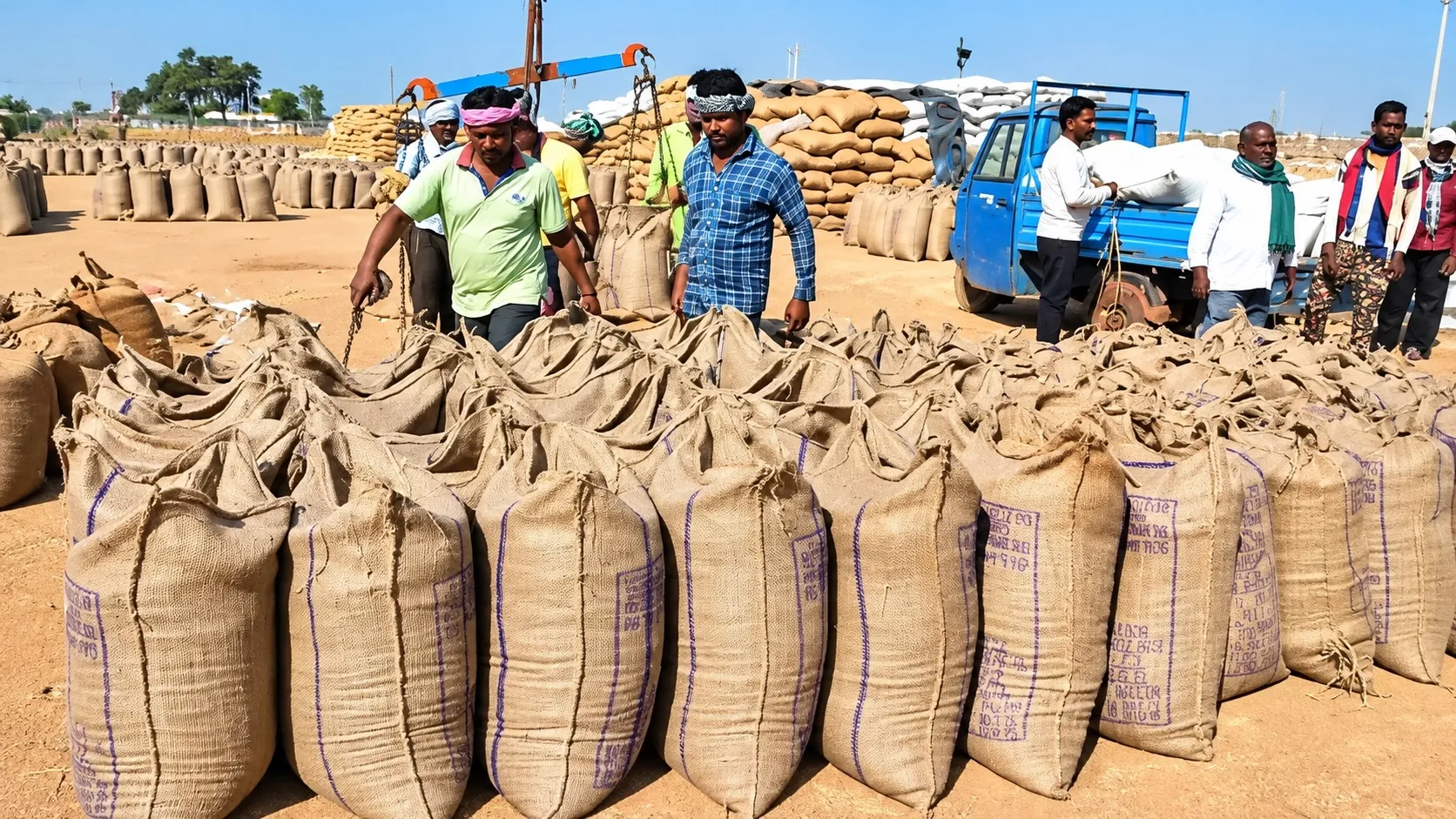
Raipur: Paddy procurement at the Minimum Support Price (MSP) for the Kharif Marketing Season 2026-27 will begin in Chhattisgarh on November 15. The state government has set a target of procuring paddy from more than 27.50 lakh farmers at a rate of ₹3,100 per quintal, subject to a maximum limit of 21 quintals per acre.
Paddy procurement will be carried out at 3,100 procurement centres across the state, including 360 new centres established this year. The government has directed officials to ensure adequate availability of new and old jute bags and maintain biometric verification to authenticate farmers and prevent irregularities.
Farmers with AgriStack IDs Won’t Need Fresh Registration
To simplify the procurement process, farmers registered with AgriStack IDs last year have already been validated for the current season. These farmers will not need to register again or submit land record documents at procurement centres.
The cultivated area will be determined online through a digital crop survey, making the process more convenient for farmers.
The Union Food Department has set a target of procuring 73 lakh metric tonnes of rice from Chhattisgarh for the central pool during the current season.
Farmers Can Generate Tokens from Home Through Mobile App
The state government will continue its online token system through the ‘Tunhar Token’ mobile application, available on the Google Play Store. Farmers will be able to generate tokens 24 hours a day from their homes, avoiding repeated visits to procurement societies and long queues.
Under the system, 70% of each procurement centre’s daily limit will be allocated through online tokens, while the remaining 30% will be available for on-site token issuance.
Of the tokens issued online, 80% will be reserved for small and marginal farmers, while 20% will be allocated to large farmers.
Number of Tokens Will Depend on Landholding
The number of tokens available to each farmer will depend on the size of their landholding.
- Farmers owning up to 2 acres will be eligible for one token.
- Farmers owning more than 2 acres and up to 10 acres will be eligible for two tokens.
- Farmers owning more than 10 acres will be eligible for three tokens.
Farmers can specify the quantity of paddy they intend to sell when generating a token. If the entire quantity is not sold in one transaction, the remaining eligible quantity will not lapse. Farmers can sell the balance later using a subsequent token, subject to the applicable procurement limit and rules.
273 Checkposts and 131 Border Centres to Be Monitored
To curb illegal transportation, recycling of paddy and procurement irregularities, the government will strengthen real-time monitoring through its Integrated Command and Control Centre.
Special inspection teams will be formed at the district level. A total of 273 checkposts and 131 border procurement centres have been identified for surveillance.
Complaints received at the command centre must be resolved within prescribed timelines:
- Highly sensitive centres: Within 24 hours.
- Sensitive centres: Within 48 hours.
- General centres: Within 72 hours.
QR Codes on Rice Bags, Vehicle Tracking to Be Mandatory
In accordance with central government guidelines, the state will introduce QR-code scanning and traceability for rice bags. The system is expected to improve stock identification and monitoring throughout the supply chain.
Vehicles transporting paddy will also be required to have location-tracking devices. This measure will help authorities monitor vehicle movements, prevent the diversion of stocks and strengthen transparency in the procurement process.