Vice President Jagdeep Dhankar stresses on goal-oriented approach for a developed India by 2047

Raipur
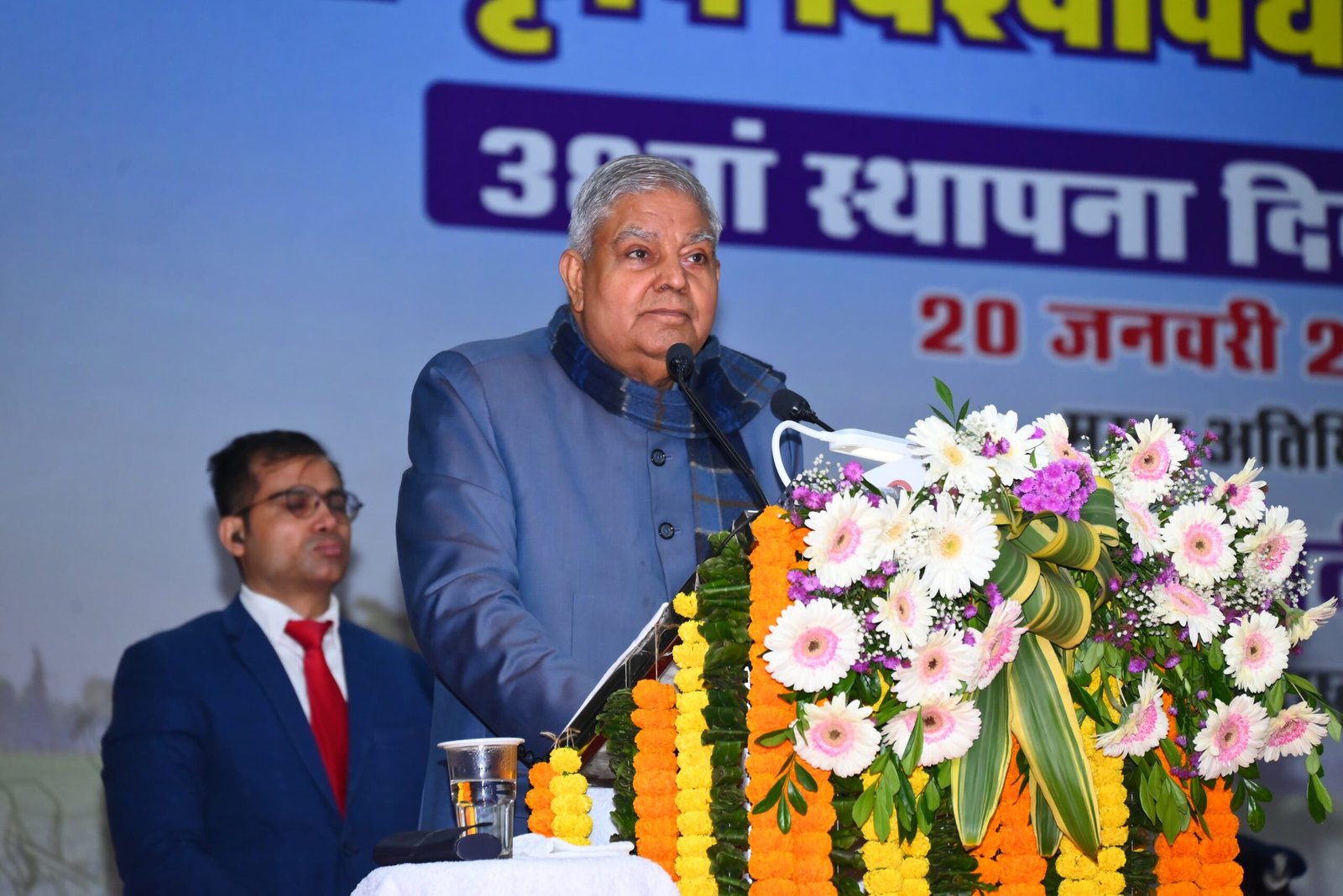
Vice President Jagdeep Dhankhar emphasized that developed India by 2047 is not just a dream but a goal, and the nation is earnestly working towards it. Over the past few years, significant changes in thinking have occurred, and today, India is emerging as a world leader in every sector, stated Dhankhar during the 38th foundation day celebrations of the Indira Gandhi Agriculture University, Raipur, on Saturday.

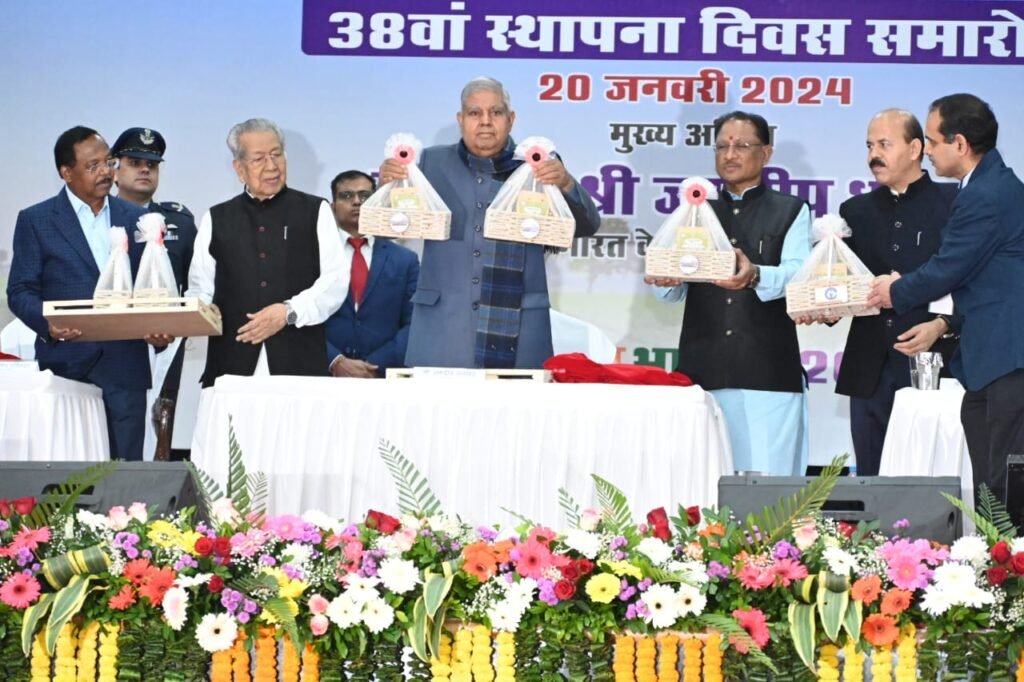
Highlighting India’s identity as a digital leader, Dhankhar remarked that the country takes pride in its diversity. He urged not to let the fear of failure hinder progress, emphasizing the potential in agriculture startups. Dhankhar, along with other dignitaries, planted saplings on the university campus.
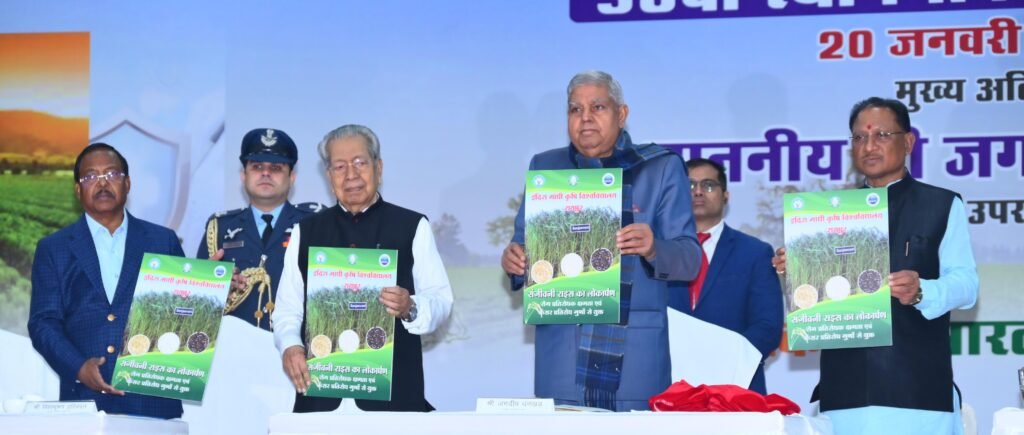
During the event, the Vice President also inaugurated “Sanjeevani Rice,” a variety developed by scientists at the university. This rice is touted to have medicinal properties, especially beneficial for boosting immunity and reportedly effective in treating breast cancer patients.
Dhankhar urged the use of indigenous products, such as Sanjeevani Instant, Sanjeevani Madhu Kalk, and Sanjeevani Bar, developed from Sanjeevani Rice. He stressed the importance of leveraging agricultural research for the benefit of society.
The university’s research department head, Dr Vivek Tripathi, explained that the “Sanjeevani” variety was created through research on “Laycha” rice, native to the Bastar region. Preliminary studies indicate its potential in enhancing the body’s immune response, and ongoing research explores its anti-cancer properties.
The Vice President also acknowledged collaborative research with institutions like the Central Institute of Medicinal and Aromatic Plants (CIMAP) in Lucknow and Tata Memorial in Mumbai. The Sanjeevani products are designed to reach the general public, with three formulations available for consumption.
Indira Gandhi Agriculture University, established on January 20, 1987, has made significant strides in agriculture education, research, and dissemination of knowledge. Over the years, it has developed approximately 162 species of 52 crops, with more than 100 technologies devised by its scientists for maximizing agricultural benefits.