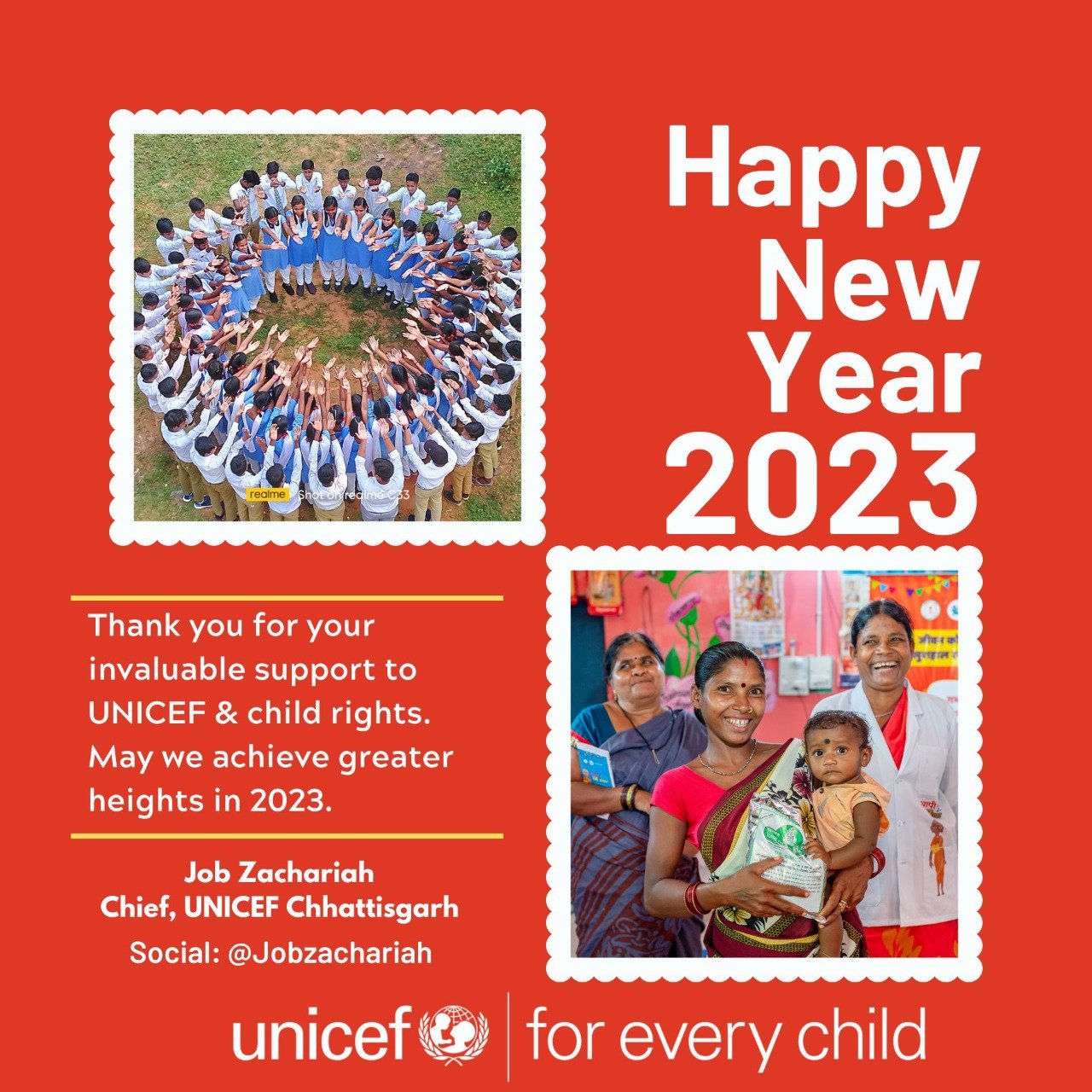
We spoke to UNICEF Chhattisgarh Chief Job Zachariah as the World Immunization week is observed from 24 to 30 April 2023. Quoting the recent UNICEF global report on child vaccination, Zachariah says that the world is facing a ‘Red alert’ for child health due to the sharp decline in the vaccination coverage during the COVID pandemic and therefore a ‘big catch-up’ is needed urgently. “Immunization protects children from 14 diseases and prevents 17% of child deaths. Besides, immunization is the right of every child, and it cannot be denied” Mr Zachariah added.
- What is the theme of this year’s World Immunization week and why this theme?
- The theme this year is “The big catch-up”. The recent UNICEF global report on child vaccination, says that the world is facing a ‘Red alert’ for child health due to sharp decline in the vaccination coverage during the COVID pandemic. Over 6.7 crore children in the world missed out on life-saving routine immunization during 2019-21 and 4.8 crore children did not get a single dose. This is a grave situation similar to an emergency. Therefore, we need to urgently ‘big catch-up’ and at least bring the global immunization coverage of children to that of 2019 levels.
- What is the situation of immunization coverage of children in India and the perception of people on child vaccination?
- In India, full immunization coverage of children increased from 62% in 2015-16 to 76.4% in 2019-21, as per the national family health survey (NFHS-4 and 5). Similarly, the Vitamin-A coverage of children of 9-35 months in India increased from 64.5% to 71.2% during the same period.
- UNICEF global report 2023 (SOWC) says that the public perception of importance of child vaccination increased only in 3 countries- India, China & Mexico. In 52 out 55 countries studied, the perception decreased while in India it increased to as high as 98%.
- How many diseases against which immunization protect children?
- Universal immunization programme of government providesseveral vaccines, which protect children against more than 14 diseases and conditions. These diseases include tuberculosis (TB), polio, diphtheria, whopping cough (pertussis), tetanus, hepatitis B (jaundice), diarrhea due to rota virus, measles,rubella, vitamin-A deficiency related diseases likenight blindness,Japanese encephalitis (brain fever)and Hib virus associated pneumonia, meningitis, and otitis (middle ear infection).
- Will immunization reduce number of child deaths?
- Yes. Immunization is the safest and most cost-effective way to end vaccine-preventable child deaths. According to WHO, 17% of deaths of children below 5 years in the world is due to vaccine preventable diseases. Therefore, vaccination will reduce the number of infant and child deaths, besides preventing diseases. Besides Vitamin-A supplementation prevents 11% of all-cause child mortality, as per Devta study.
- What are the other benefits of vaccination?
- Diseases in children cause tremendous stress and worry to parents and grandparents. Besides, diseases will cause additional expenses for families, especially for the poor and the marginalized households. This could be prevented by vaccination of children against diseases.
- When should a child be immunized?
- A child below 5 years should be immunized 7 times. The message is “7 times in 5 years”. Child should be given immunization at birth, 1.5 months, 2.5 months, 3.5 months, 9 months, 1.5 years, and 5 years.
- What about Vitamin-A?
- Besides immunization, children should be given Vitamin-A at 9 months along with MR vaccine and then every six months up to five years of age. Vitamin-A supplementation can improve immunity of children, prevent Vitamin A deficiency related diseases, and reduce all-cause child mortality by 11%.
- Where should parents go to immunize child?
- Immunization sessions are held in the anganwadi centres in villagesevery month. In some villages, these sessions are held in schools, panchayat buildings and community halls. The immunization facility is also available at health sub centres, primary health centres (PHCs), community health centres (CHCs), district hospitals and government medical colleges.
- What is the fee for immunization of children?
- No fee at all. It is totally free under the immunization programme of the government in government facilities. But private hospitals could charge Rs.10,000 to Rs.25,000 for these vaccines, which includes consultation fee of doctors, registration fee at hospital, injection charge and cost of vaccination.
- Can sick child be given vaccination?
- Yes. Sick children suffering from mild illness, like mild fever, cold, cough or mild diarrhea can be safely vaccinated. However, children with severe illness requiring hospitalization (due to high fever, server diarrhea) should not be vaccinated during the acute phase.
- What are the side effects of vaccinations?
- In injectable vaccines (like DPT and hepatitis B), children may have mild pain and swelling at the injection side. This is normal and goes away within 1-3 days. These side effects are not related to quality, safety, and efficacy of the vaccines. Children may also experience fever, which is normal and will go away in 1-2 days.